Waitlist open · Junio 2026 production
Join the waitlist →The leathers
Every piece begins at a tannery. We work with the same suppliers that source leather for the world's most demanding luxury houses — chosen not for their name, but for how the leather ages in the hands of the person who carries it.

Tannery
Badalassi Carlo
Pescia, Tuscany · Italy
Founded in Pescia, at the heart of Tuscany's tanning region, Badalassi Carlo is one of the reference houses in the world of vegetable-tanned leather. Their work continues a centuries-old tradition in which time — not chemistry — is the agent of transformation.
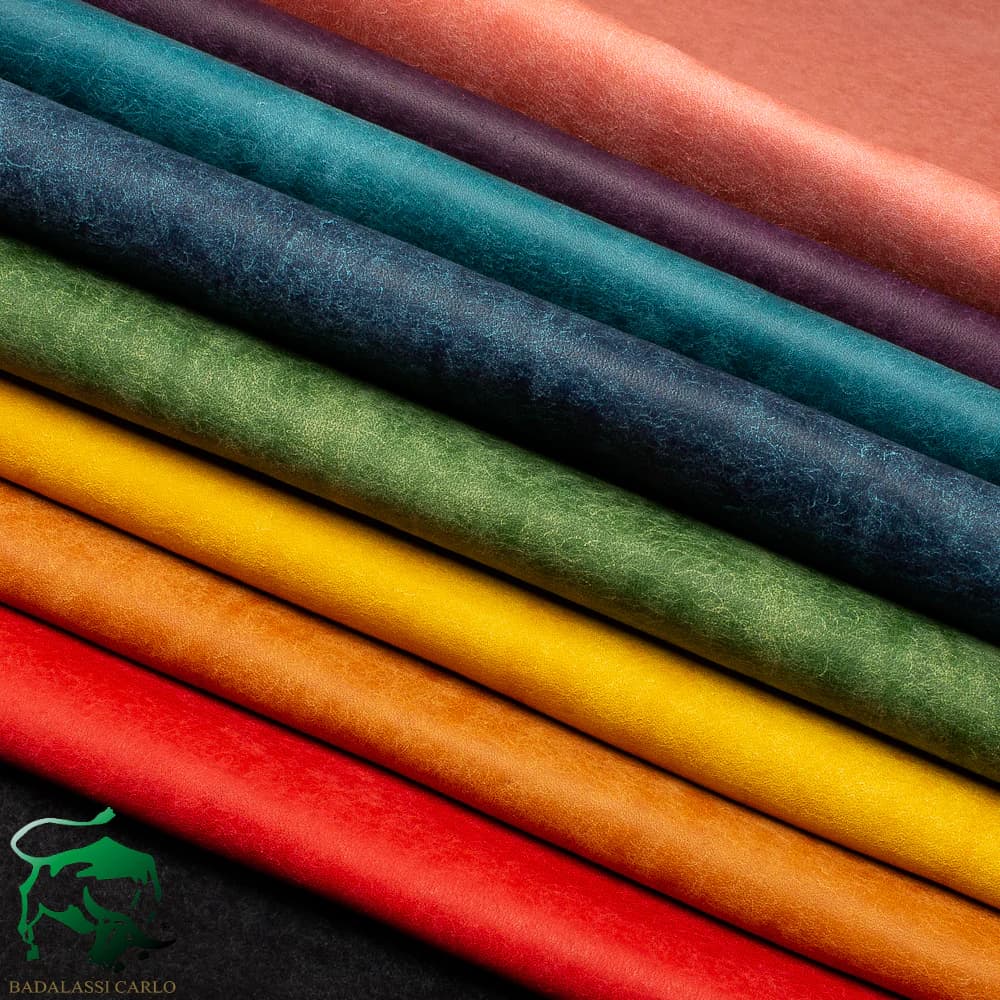
Pueblo
Matte surface with an almost velvety touch. When folded or pressed, the leather lightens slightly — the pull-up effect characteristic of the finest vegetable tans. This is not a leather that looks the same for years: it begins to change within the first weeks of use.
How it ages
It darkens in the areas of most contact. Scratches and marks appear, then settle into the surface and become part of the material. After a year of daily use it has a depth that cannot be replicated.

Tannery
Conceria Walpiere
Santa Croce sull'Arno, Tuscany · Italy
Conceria Walpiere operates in Santa Croce sull'Arno, Tuscany's historic tanning district. Their leathers combine Italian technical precision with vegetable-tanning methods that take weeks to complete — the result is a raw material with a character of its own.

Dollaro
Fine, uniform grain and a clean surface. A leather that puts the craftsperson's work in full view — burnished edges and stitching show at their best against its even face. Refined without being cold.
How it ages
It develops a soft, warm patina. Every mark lands with precision on its surface. Over the years it acquires a silky, living sheen that only comes with use.

Buttero
Firm body, smooth face. One of the most classic vegetable tans in the Italian tradition. Press a fingernail into it and it leaves a temporary mark that fades on its own — that is the Buttero pull-up, more pronounced and defined than in other leathers.
How it ages
Areas of regular contact develop a deeper, richer tone. After years of daily carry, a piece in Buttero looks as though it was made specifically for the person who carries it — because it was.

Hatch
Firm in hand, with a pronounced texture. Colors are uncorrected — the natural tone that comes directly from the tanning process. What you see is exactly what the leather is, with nothing to mask it.
How it ages
With use it develops a patina that deepens its natural colors. The texture softens gradually in areas of contact while its character remains intact. A piece in Hatch improves visibly over the years.

Tannery
Alran
Graulhet, Occitanie · France
Alran has been producing leather in Graulhet, in the south of France, since the nineteenth century. The region has its own tanning tradition, distinct from the Italian — softer in hand, equally firm in character. Their leathers are prized in the most demanding ateliers in the world.

Sully
Alran's signature leather. Vegetable-tanned by the traditional method of southern France, it has a softer hand than Italian vegetable tans without losing structure. Fine grain, silky surface, clean drape.
How it ages
It develops a deep golden patina. The warm tone of the Sully — its natural yellows and siennas — intensifies with use and light. At ten years, a piece in Sully is unrepeatable.
Available colors
Colors are chosen when confirming your piece. We work with each tannery's full palette — write to us if you have something specific in mind.
Escribirnos →